Air Source Heat Pumps Explained in Five Minutes — A Cambridge Primer
Last reviewed: 2 October 2026
Everything you need to know before your first heat pump conversation, in five minutes — the parts, the vocabulary installers use, the money, and the Cambridge-specific points worth raising.
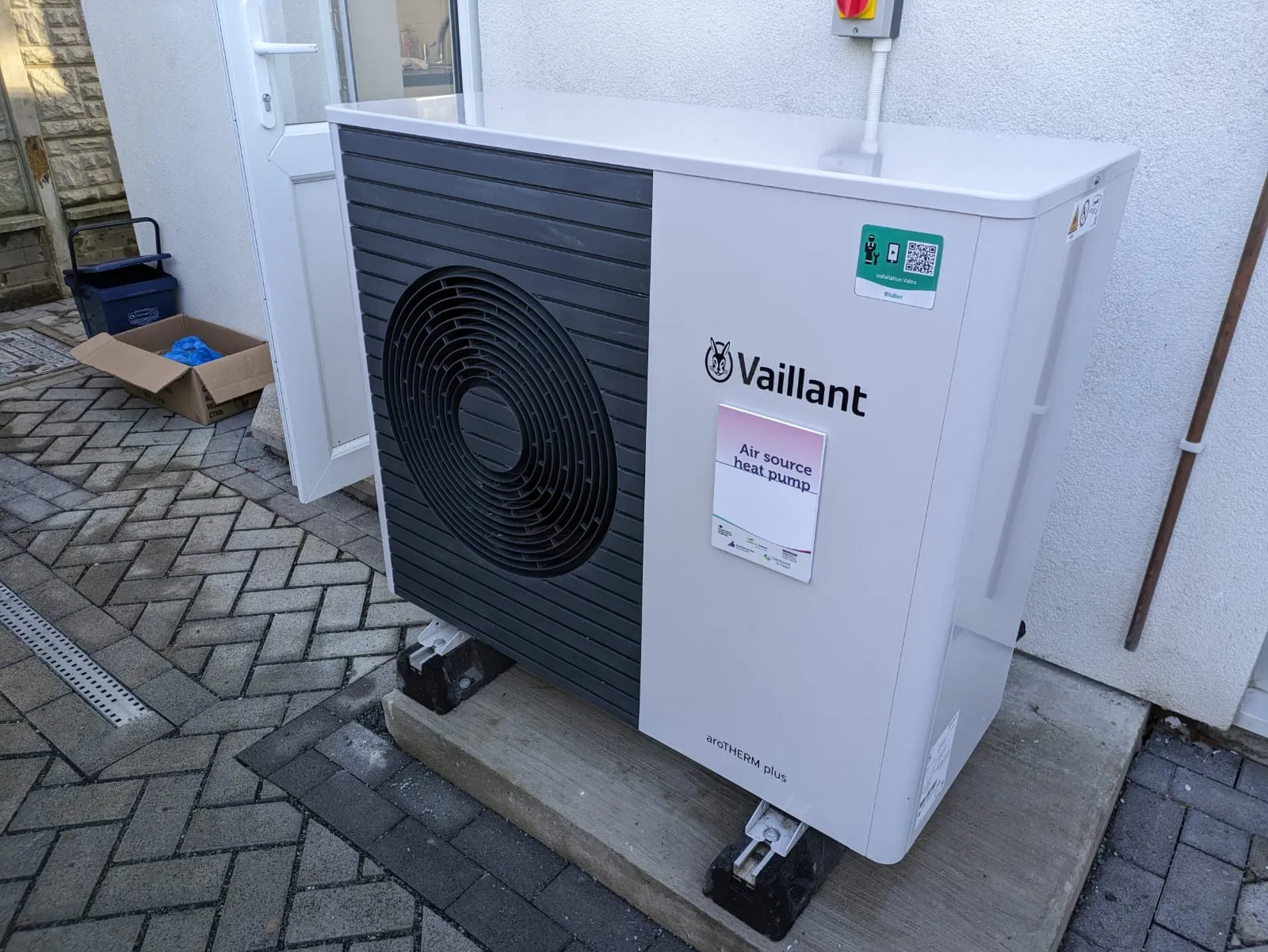
Minute one: what it is
An air source heat pump heats your home and water by extracting warmth from outdoor air and concentrating it, using electricity to drive the process. It connects to radiators (or underfloor heating) and a hot water cylinder, replacing a gas, oil or electric heating system.
It works in cold weather. Even on a frosty Cambridge morning, the air holds usable heat, and heat pumps are the standard way to heat homes in much colder countries such as Norway.
Minute two: the parts
| Part | Where | What it does |
|---|---|---|
| Outdoor unit | Garden, yard or wall bracket | Draws in air and collects its warmth |
| Hot water cylinder | Airing cupboard, landing or loft | Stores hot water for taps and showers |
| Radiators | Every room | Release the heat; some may be upsized |
| Controller | Wall or app | Sets temperatures and schedules |
Minute three: words installers will use
- Heat loss — how many kilowatts your home leaks on a cold day. Sets the size of everything.
- Flow temperature — how hot the water going to your radiators is. Lower is more efficient; 45–50°C is typical. See flow temperature explained.
- SCOP — seasonal efficiency: heat delivered over a year divided by electricity used. Around 3–3.5 is realistic in Cambridge. See SCOP and COP explained.
- Monobloc — the usual UK type, with all the refrigerant sealed in the outdoor unit. See monobloc vs split.
- Defrost — the short cycle that clears frost from the outdoor unit. Normal, and frequent on Cambridge’s frosty nights. See defrost cycles.
- MCS — the certification an installer needs before the grant can be claimed.
Minute four: the money
- Installation: usually £10,000–£13,000 before the grant for a Cambridge home; more for big Victorian villas.
- Grant: £7,500 from the Boiler Upgrade Scheme, or £9,000 replacing oil or LPG (applications until 31 March 2027). Homeowners and private landlords both qualify.
- Running costs: often below gas, especially on a heat pump tariff. See Cambridge running costs.
- Free upgrades: lower-income households may qualify through the Cambridgeshire Energy Retrofit Partnership.
Minute five: Cambridge points to raise
- Frost. Ask what outdoor design temperature the installer is using, and where defrost water will drain.
- Hard water. Cambridge’s chalk supply is around 286–295 mg/l, so ask for a cylinder with a heat pump-rated coil.
- Solid walls. Gault-brick Victorian terraces need a proper room-by-room calculation and usually a few larger radiators.
- Heritage. In one of the city’s 18 conservation areas, keep the unit off road-facing walls; listed homes need consent.
- Tenancies. Landlords should plan installation between lets.
Next reads
See what a heat pump would look like in your Cambridge home
The mechanism is the same in every UK home; the design is specific to yours. Our team carries out a free in-home survey including a full room-by-room heat-loss calculation, identifies the system size and configuration that fits your property, and provides a written quote with the £7,500 BUS grant already deducted.
You'll see the actual figure you'd pay — not an estimate — and the projected efficiency for your specific install.